Articles

Inspiring stories, health news, and useful information about self-care

10 Neurological Disorders You Should Know

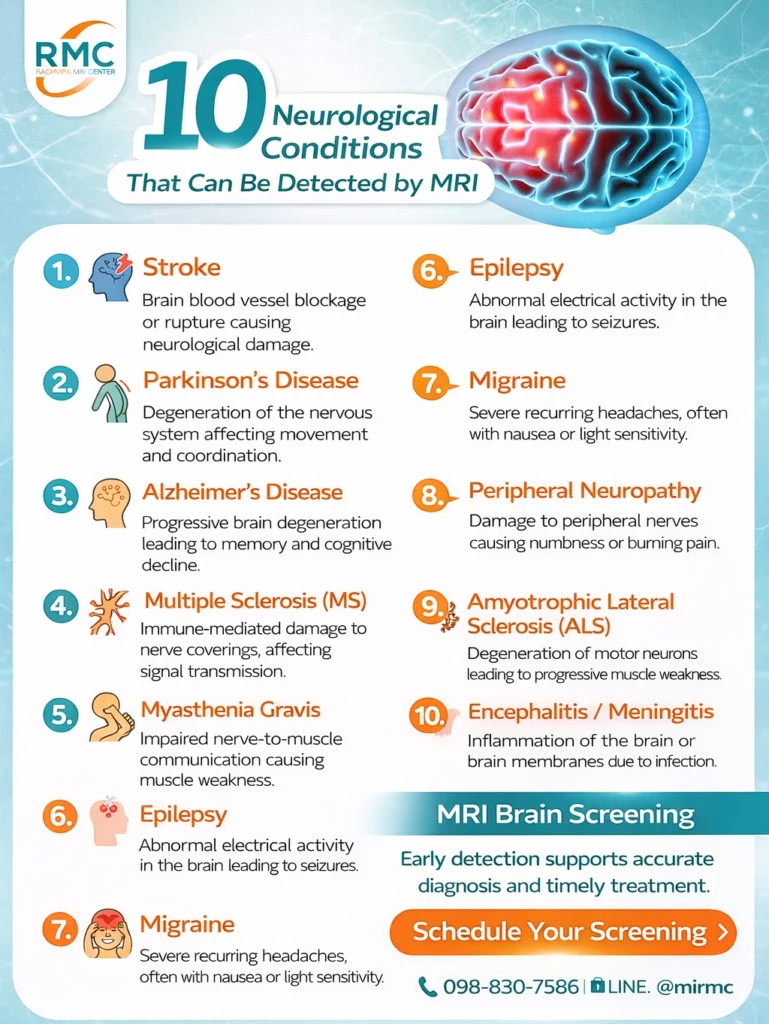
The nervous system controls nearly all functions of the body—from movement and thinking to sensory perception. Neurological disorders such as stroke, Parkinson’s disease, Alzheimer’s disease, and migraine can be diagnosed more accurately when detected early with MRI, allowing physicians to begin targeted and more effective treatment sooner.

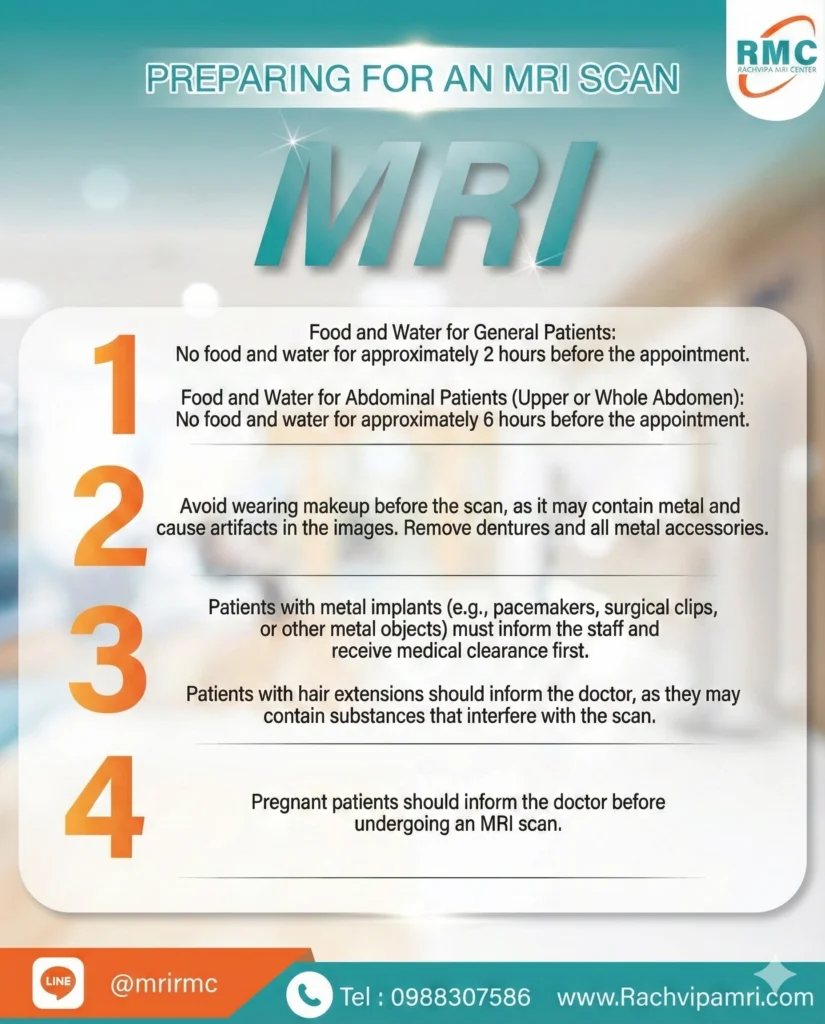
Preparation Before an MRI Examination

Proper preparation before an MRI scan is essential to ensure safety and obtain clear, high-quality images. Patients should refrain from eating and drinking as instructed, remove all metal accessories, and inform the physician if they have any metal implants in their body. Correct preparation helps physicians make accurate diagnoses and effectively reduces risks associated with the examination.

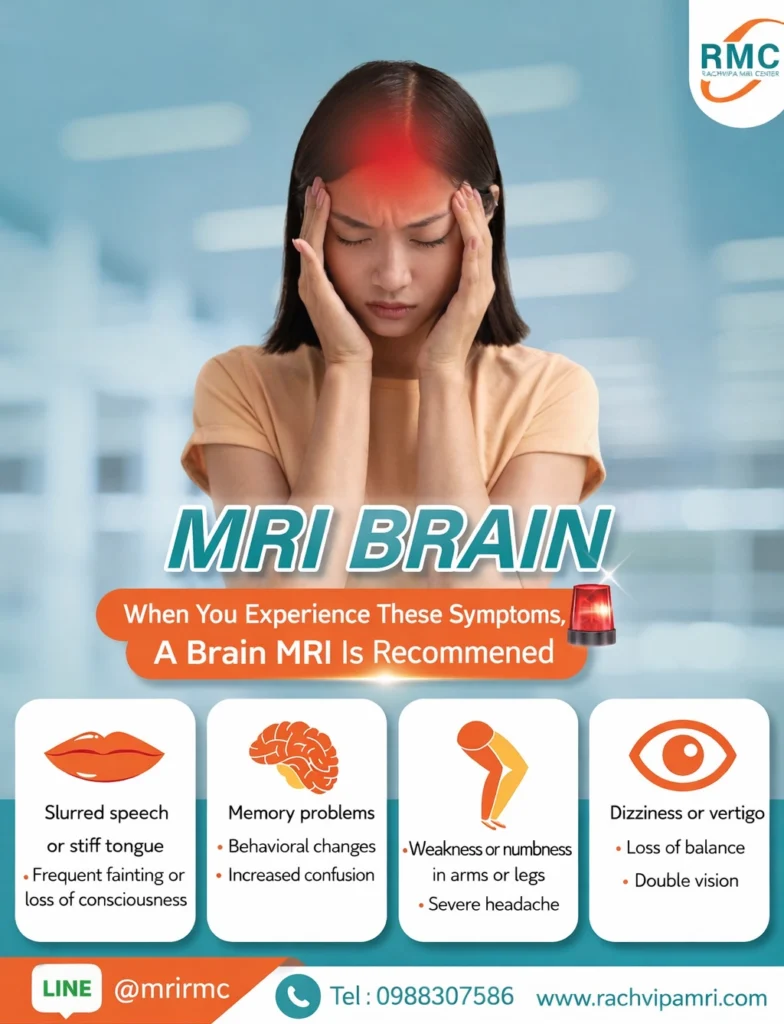
MRI Brain

Chronic headaches, frequent dizziness, or weakness in the arms or legs may be signs of underlying brain abnormalities that should not be overlooked. A brain MRI provides clear, detailed images of brain tissue and blood vessels, helping to accurately and safely identify the cause of these symptoms.
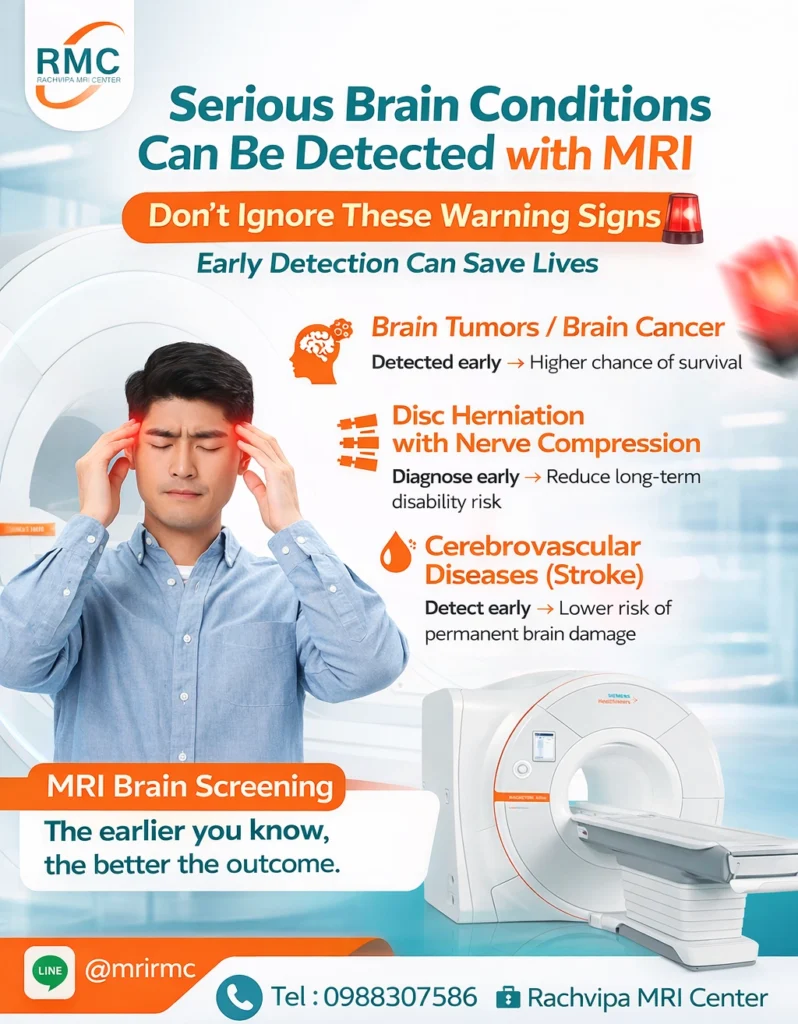
Serious Conditions Detectable by MRI

MRI can detect abnormalities of the brain and nervous system from an early stage. It helps accurately diagnose serious conditions such as brain tumors, cerebrovascular diseases (stroke), and herniated discs compressing nerves. Early detection increases the chances of effective treatment and reduces the risk of future complications.

Checklist: 8 Simple Tips to Age Without Alzheimer’s

Alzheimer’s disease is not solely a matter of age—it is also influenced by long-term lifestyle habits. Taking care of your brain starting today, such as getting enough sleep, exercising regularly, and having periodic brain check-ups, can effectively help reduce the risk of dementia.